

Non-Violent Communication
Click on the Image Below to Buy on Amazon
I came across the Nonviolent Communications Book by Marshall Rosenberg on Audible
The title does not do it justice. It is not just about communication but covers many fundamental aspects of human relations. If everyone lived by the light of the insights contained in it, we would live in a much better world with less conflict and enjoy more fulfilment.
To follow is a series of reflections on what I have learned from the book. I sincerely hope it makes a real difference to how we show up in the world and leads to more fulfilling relationships all around, both in the workplace and in our personal lives as well.
Red Mist
By Frank Irawo
How infuriating is that?
How dare they speak to me like that?
I won’t be taking that lying down
I am going to stand up for my rights!
An eye for an eye, a tooth for a tooth
Humanity reduced, blind and toothless
Enshrouded in the red mist
Feeling powerless to end the cycle
Maybe there is a better way
Not so far out of reach
Much closer than we think
Flowing right from our lips via the heart and head
In the sphere of human interaction, every event tends to have two layers. The observation and the resultant evaluation.
An observation is a statement of fact within the context of time. It can be verified by science with no fluff added.
An evaluation is the observer's take on the facts expressed as a Diagnosis, Criticism, Analysis, or a guess at the other person’s intent, etc.
These are all subject to the personal filter of the observer and would trigger responses based on the relative filter of the subject of the observation.
This is why the same event may affect several people and they will all respond differently based on their personal evaluations of the observed event. It is the same reason why the same glass may be half full and half empty.
Let’s say you have a work colleague that interjects every topic in a meeting with personal antidotes that do not meet the needs of the attendants causing many a meeting to take longer than they need to. You eventually get frustrated and decide to address the matter head-on.
You say something like “you are a self-obsessed, boastful, big head, always going on about yourself and wasting everyone’s time!”
Is the above statement an observation or evaluation?
Have a go at how you would present this as an observation.
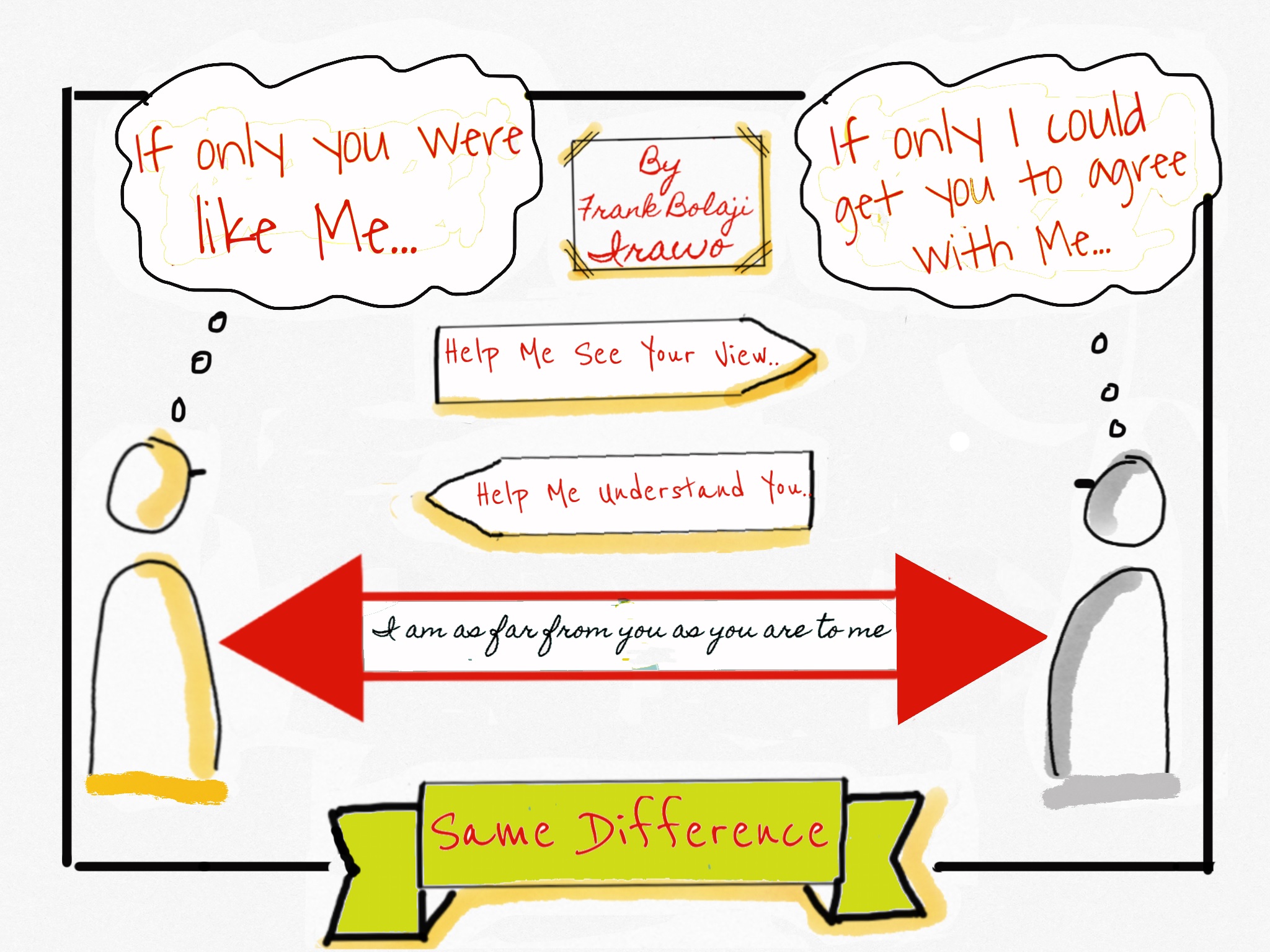
Same Difference
By Frank Bolaji Irawo
I am different, so are you
Not one of us exactly the same
Even if birth in the very same womb
Hewn out of the self-same egg
Our fingerprints as unique as can be
You are as far from me as I am to you
How much that matters
Very much depends on you and me
For all our differences
This one thing is true
We share the planet
So, our survival depends on you and me
In our differences lie the opportunity
To embrace and learn from something new
If I chose to walk in your boots and you in mine
We benefit from our different views
A wider horizon from which to see
The things we both share
One planet, one humanity
To be continued..
In part 2 we looked at the difference between an observation and an evaluation. The following statement is in fact a full-on evaluation prompted by an observation which has not been articulated.
“You are a self-obsessed, boastful, big head, always going on about yourself and wasting everyone’s time!”
This has every potential to get the other person’s defense shields activated at which point there is little chance of meaningful progress in identifying and resolving the matter at play.
Here is my attempt at stating the observation and how it is not meeting the needs of the observer
“When we are in meetings you are constantly interjecting antidotes that I do not find helpful in achieving what I want from the meeting”
The benefit of opening with your observation, free from any evaluation is that it should be irrefutable and by following it with a clear statement of why it is not meeting your needs is more likely to avoid the employment of defense mechanisms and free up energy towards reaching a win-win outcome.
“..antidotes that I do not find helpful in achieving what I want from the meeting” is hard to argue against because it is specific to you and opens the door to exploring what you need from the meeting and how it might be better met.
Pay attention to your interactions with people for a week and become aware of which parts of your statements count as Observations and which are evaluations.
Practice changing your evaluations into observations following that with which of your needs are not being met.
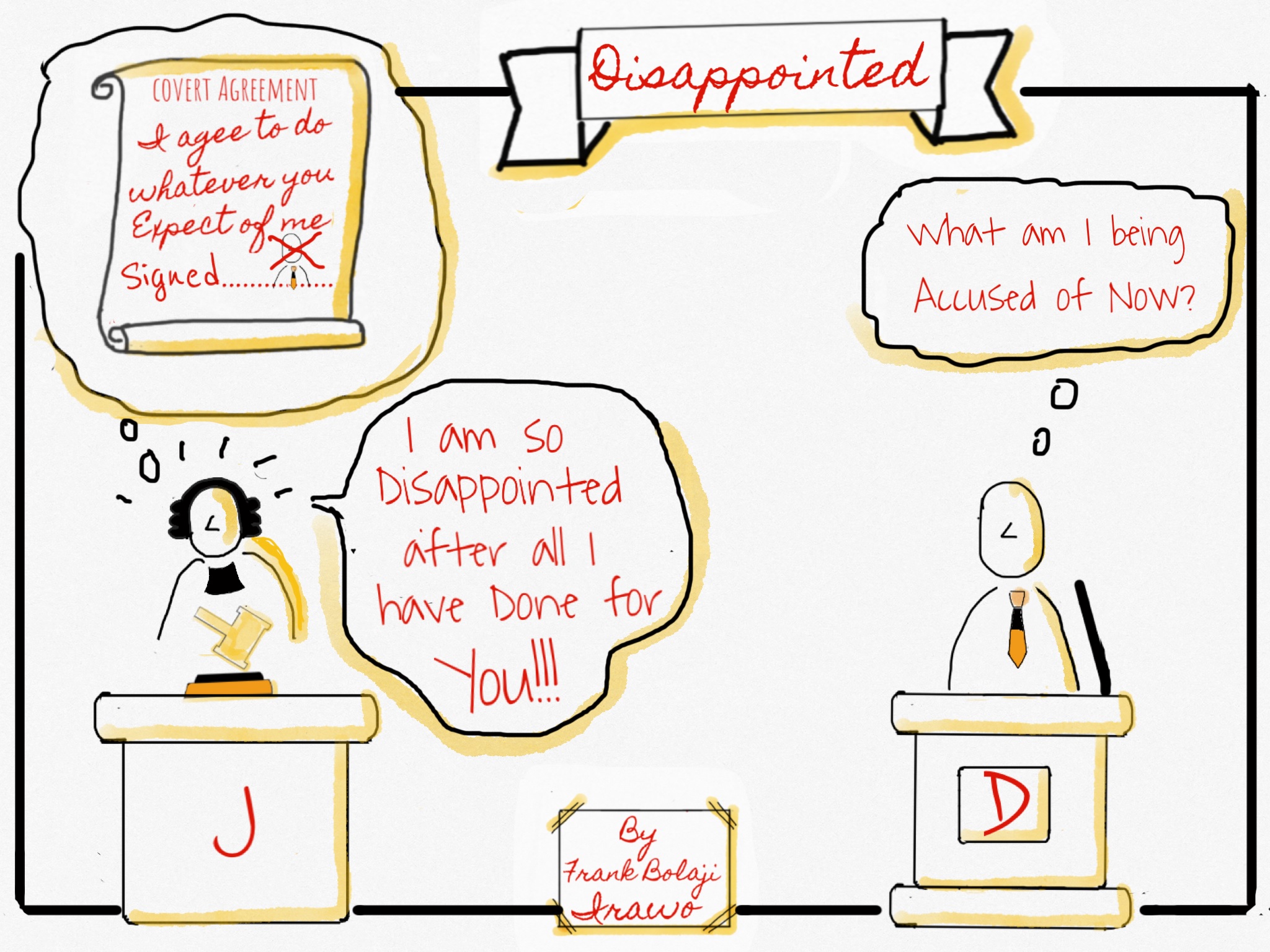
Disappointed
By Frank Bolaji Irawo
Adjudged to be guilty
Failing to live up to expectations
Set out in a covert contract
Never signed by the defendant
Its terms and conditions
Set out by the plaintiff
Based on standards never spoken
Disappointed cause they never showed up
To an appointment
In response to an invitation never issued
Unhappy about the conduct of another
Failing to meet standards
Set up by life experiences
Foreign to the offender
Written in invisible thoughts
Hatched in the head of the accuser
They just never stood a chance to comply
For that which they never did apply
But they felt the full power of a judgment
Issued by a biased judge and jury
Compromised by a different worldview
Unknown to the accused as the golden standard
To meet is to approach from both sides
They have their own standards
They have their own expectations
A meeting of minds and an overt contract later
Justice may then be better served
'Cause you make me feel…Like a natural..”
The concept of attributing your anger and frustration to someone else is often unchallenged but can; in extreme circumstances, be fatal.
There are people in our maximum-security prisons who are still blaming other people for their own uncontrolled rage.
The circumstance is just an opportunity for what is in you to show up. The rules for what triggers which emotion is firmly within our own control. If that were not the case, then everyone would have the same response to the same circumstances.
I know this can be hard to accept. Being able to blame others for what is in us can offer us immediate relief from having to answer the deeper question as to why that particular trigger creates that emotion in us and we can move on blissfully having traded the long-term benefit of becoming better with the short-term payoff of feeling better.
If something outside of you is responsible for what is happening within you, then they or it must change for things to get better. That narrative amounts to an abdication of your inherent sovereignty over your own life. You have handed your power for change to a source you do not control.
You have missed the wonderful opportunity to ask that much deeper question, “what is in me that is being triggered?” This opens the path to self-awareness which in turn takes you 90% of the way towards freeing you from the tyranny of that trigger.
Keep an eye on your emotions and reflect on what/who you attribute it to and then look inward for the answer.
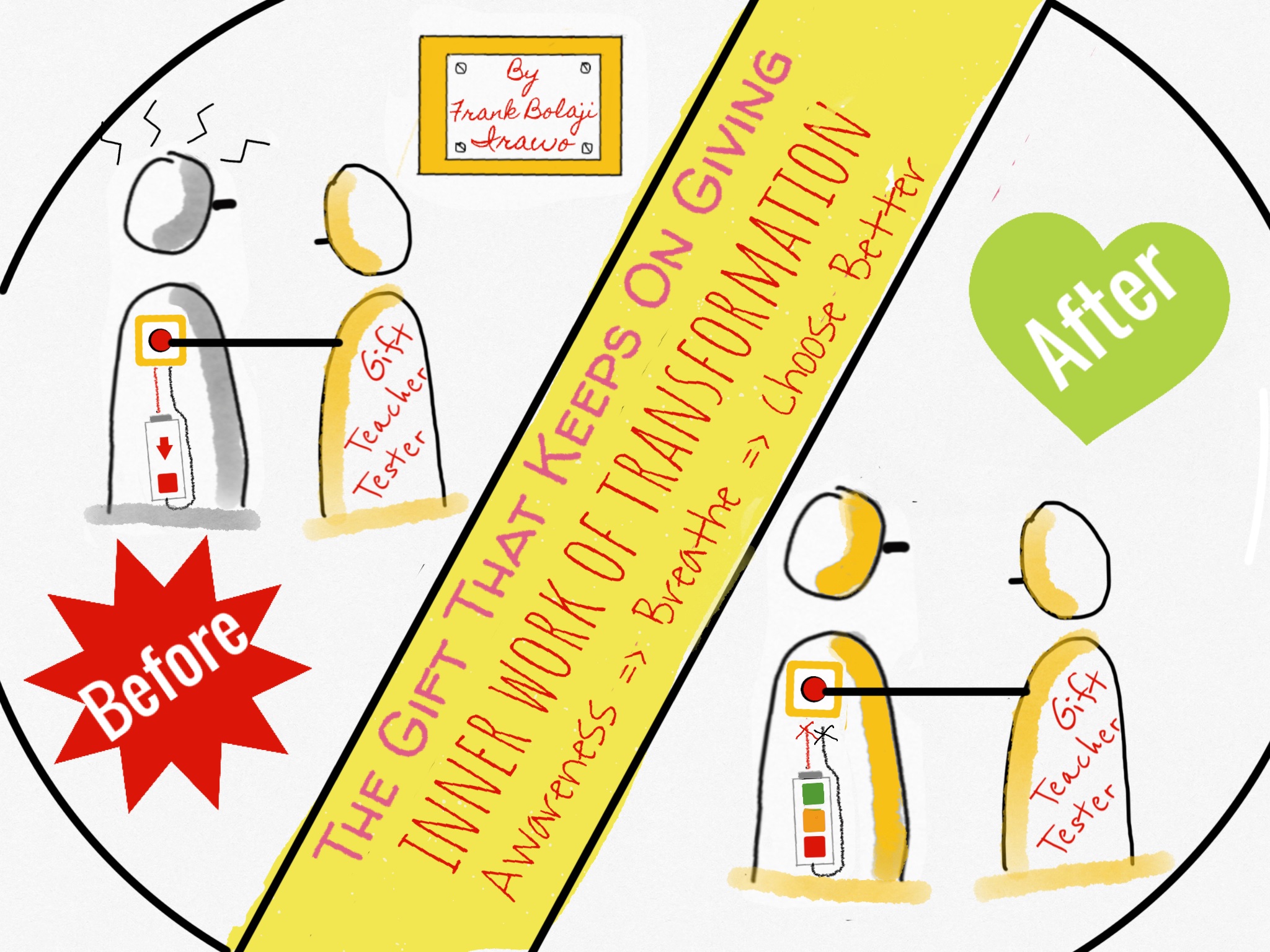
The Gift That Keeps On Giving
By Frank Bolaji Irawo
‘When the student is ready the teacher will appear. When the student is truly ready the teacher will Disappear." - Lao Tzu
Pressing my buttons
So I have no misgivings
As to what they have been sent for
To show where my growth edges lie
Till I have grown to overcome them all
Known only from when they prod
And no reaction comes
Off they will go to the next one
Their job done
Until then
They keep prodding
My faithful teacher and tester
The Gift that keeps on giving
Very often our frustrations emanate from the fact that we have needs that are not being met.
The “I feel … because I…” is a more helpful framework for expressing the reason behind our feelings.
Going back to our previous scenario with the overrunning meeting:
“you are a self-obsessed, boastful, big head, always going on about yourself and wasting everyone’s time!”
Could be reframed as follows:
“I feel frustrated when you are constantly interjecting antidotes during our meetings because I have a need for the objectives of the meeting to be met and for it to finish on time”
It is often good practice to ensure that despite the rephrase the person has not heard it from a judgemental filter, by respectfully asking that they confirm back what they heard you express.
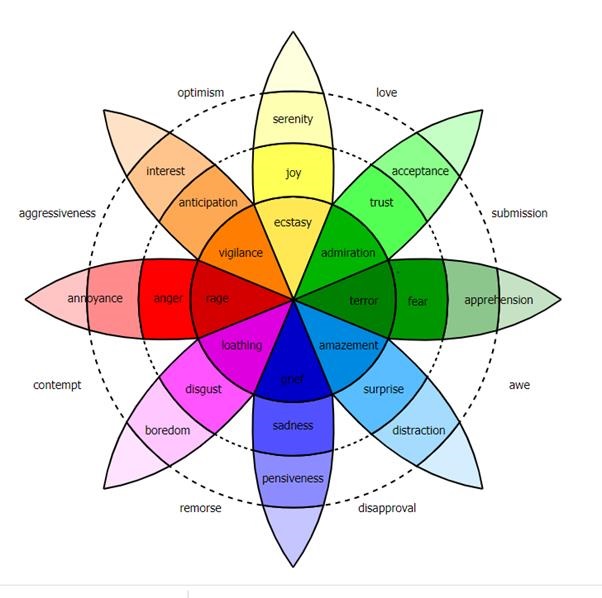
Below is a spectrum of most of the emotions we experience.
Spend time becoming aware of your emotions and trying to work out which of your needs are being met (or not) that gave rise to it.
Feelings
By Frank Bolaji Irawo
Nothing is ever really as it feels
It just feels like it really is
Cause the thinking makes it so
The body providing the resounding echo
The recognition of our shared humanity where everyone’s needs count is the backdrop against which Non-Violent communication is set.
As much as we have needs that we want to be met, we should be just as interested in the needs of the other party and seek to work towards a win-win situation.
There is a good chance that their needs have prompted their actions as well. If they can articulate their needs, then a way can be found towards fulfilling both sets of needs.
We Win
By Frank Irawo
I am me and you are one too
All depends on points of view
Me a name I call myself
Just so no one becomes confused
When me and you come together
We make something quite unique
One that would otherwise not have been
That special something called we
If I win but you lose
Robbing Peter to pay Paul
What have we really won?
If I win and you do too
Then we really win, me and you!

I hope that this series has proved to be of value to the family.
I received a stark reminder that reviewing how we are showing up in the world is a constantly evolving process for all of us.
Late last week I went into rant mode about a situation that I judged not to have been handled to my preference. In other words, I had been “triggered”.
I have not quite yet put my finger on why I will be getting support from one of my pool of peer coaches to uncover the opportunity for growth that this presents.
This is the kind of introspection that I alluded to in part 4.
If you want further support with any of the areas raised in this series. If you are interested, get in touch via email.
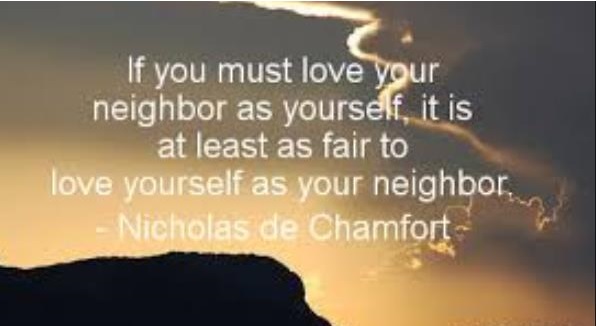
As part of my commitment to press into my discomfort with vulnerability here is what happened when I took the situation (see below), I reported in Part 8 to one of my coaching cohorts.
“...Late last week I went into rant mode about a situation that I judged not to have been handled to my preference. In other words, I had been “triggered”. I have not quite yet put my finger on why I will be getting support from one of my pool of peer coaches to uncover the opportunity for growth that this presents.”
My fellow coach created a safe space to explore what happened and the following came up:
1. I was not taking into consideration the difference in working styles and the limits of my own remit.
2. I was having a conversation in my head about verbal and physical cues and reaching my own conclusions.
It turns out that I’m the coolest most understanding guy in the room till someone inadvertently presses the (right) buttons.
The action from the coaching session was to set up a meeting and share perspectives and work out a mutually agreeable way of working.
As the old BT advert said,” It’s good to talk” and It turned out to be so “Much ado about nothing”.
Note to self, "Beware the stories you tell yourself, you might start believing it!"
My advice if you have a similar experience in the future, is just to seek an audience ASAP and discuss.
Good guidelines for such discussions are:
1. State observation in facts only, with no judgment or conclusions
2. State the perception you developed
3. State the impact on you
4. Seek feedback to see if the impact was intended
5. Agree better protocol of engagement going forward
Our shared journey to better self-awareness continues, there is no shame in seeking support to understand and show up better in every area of life.
If I can support your journey in any way, please get in touch.
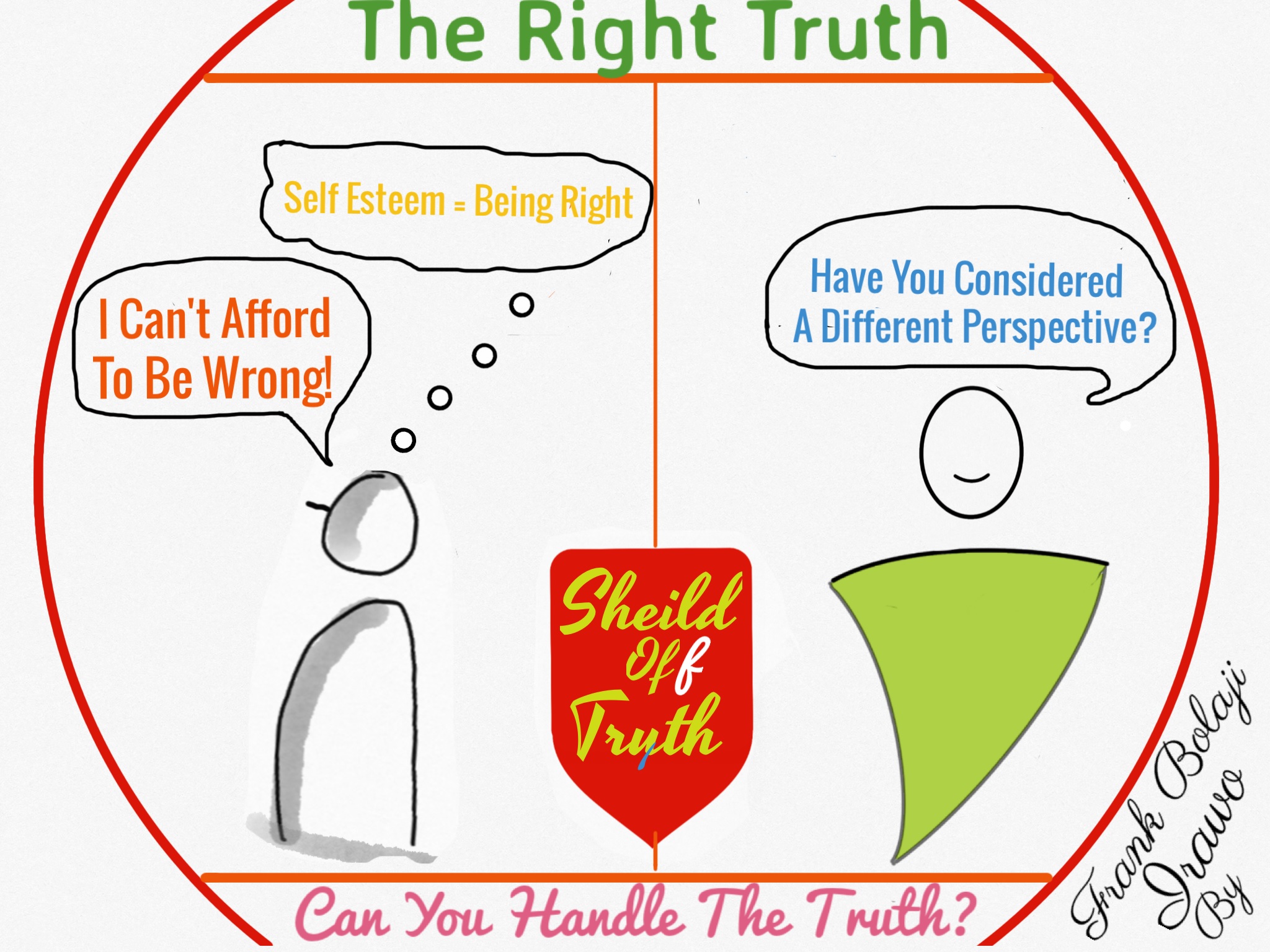
The Right Truth
By Frank Bolaji Irawo
Not one to let the truth get in the way of being right
There is no way I’m going down without a fight
What would become of me
If I were not proven to be right
How wrong would that be?
Join The DREAM Team
* Get a Free Sample Copy Of The Book
* Get Advance Notice Of Exciting Live Events
* First In Line For New Coaching programs/Courses/Book Clubs
* Help Co-Create The Next Two Books
Frank Bolaji Irawo
Coach. Author Poet Speaker.
Let's Have A Chat:
https://calendly.com/letmebefrank/connect
Email:
LinkedIn:
www.linkedin.com/in/frankbolajiirawo
Every purchase of DREAM Supports Charity Water, Lend With Care, The Blue Fund, and B1G1
Please Note That Not All Poems Feature In DREAM


Conversations to Ascend Living Miserably by creating Space to Embrace Life Fully
© 2019 | Systeme.io

